DNS, WebRTC, and TLS Leaks: How to Check Them
Learn the differences between DNS Leak, WebRTC Leak, and TLS Fingerprint and how to check your network environment using Whoer, IPleak, DNSLeaktest, and BrowserLeaks.
- 1.DNS Leak
- 2.WebRTC Leak
- 3.TLS Fingerprint
- 4.Top Services for Checking Leaks
- 5.How to Check Your Connection
- 6.Conclusion
When using a VPN or Proxy, some network data may not be transmitted the way you expect. For example, DNS requests may go through an unintended server, while WebRTC can expose additional network information. TLS works differently: its parameters are part of the connection itself and can be used to create a TLS Fingerprint.
Let’s look at how these mechanisms differ, how to check them, and which tools can help identify potential issues.
DNS Leak
DNS (Domain Name System) translates domain names into IP addresses. When using a VPN, DNS requests should normally be handled according to the VPN connection settings.
However, due to the operating system, VPN client, or network configuration, DNS requests may sometimes continue to go through your Internet Service Provider’s DNS servers. This is known as a DNS Leak.
As a result, your ISP may potentially see DNS queries even though the main traffic is routed through the VPN. This does not mean that the content of HTTPS pages becomes exposed.
To reduce this risk, use a VPN with DNS Leak Protection and check which DNS servers are actually being used after connecting. If necessary, you can also configure Secure DNS or use a third-party DNS provider.
WebRTC Leak
WebRTC (Web Real-Time Communication) is a browser technology used for video calls, voice communication, and direct data transfer.
To establish a connection, WebRTC works with network interfaces and ICE candidates. Depending on the browser and network configuration, these mechanisms may expose additional network information to a website.
For this reason, after connecting to a VPN or Proxy, it is useful to check which IP addresses are visible through WebRTC.
Completely disabling WebRTC is not always necessary, as it may interfere with video calls and other browser-based services. In antidetect browsers such as WadeX, WebRTC should be considered together with Browser Fingerprint, Proxy, and IP Geolocation to keep the profile environment consistent.
TLS Fingerprint
TLS (Transport Layer Security) provides the secure HTTPS connection between a browser and a website.
When establishing a connection, the client sends a set of TLS parameters, including Cipher Suites and Extensions. Their combination can be used to create a TLS Fingerprint, including fingerprints generated using methods such as JA3 and JA4.
Unlike DNS and WebRTC leaks, a TLS Fingerprint is better understood as a characteristic of the connection rather than a conventional data leak. A server can use it as one of the signals for identifying the type of client making a request.
For example, if the User-Agent identifies the browser as Chrome but its TLS parameters differ significantly from those normally associated with that Chrome version, the mismatch may become an additional signal for anti-bot systems.
A TLS Fingerprint cannot simply be hidden because TLS is required for HTTPS. Maintaining consistency between the browser and network environment is therefore more important.
| Mechanism | What Happens | What a Website or Third Party May Observe | What to Check |
|---|---|---|---|
| DNS Leak | DNS requests are handled by an unintended DNS server | DNS queries and the DNS resolver being used | Check which DNS servers handle requests |
| WebRTC Leak | WebRTC and ICE candidates may expose additional network information | IP addresses and network information available through WebRTC | Check which IP addresses are visible through WebRTC |
| TLS Fingerprint | TLS ClientHello parameters form a characteristic fingerprint of the HTTPS client | Cipher Suites, Extensions, JA3/JA4, and other TLS characteristics | Check whether the TLS Fingerprint is consistent with the browser. TLS Fingerprint is not a conventional data leak. |
Top Services for Checking Leaks
After connecting to a VPN or Proxy, you can use several services to check your network environment. You do not need to use all of them, as each tool is useful for a different type of test.
1. Whoer
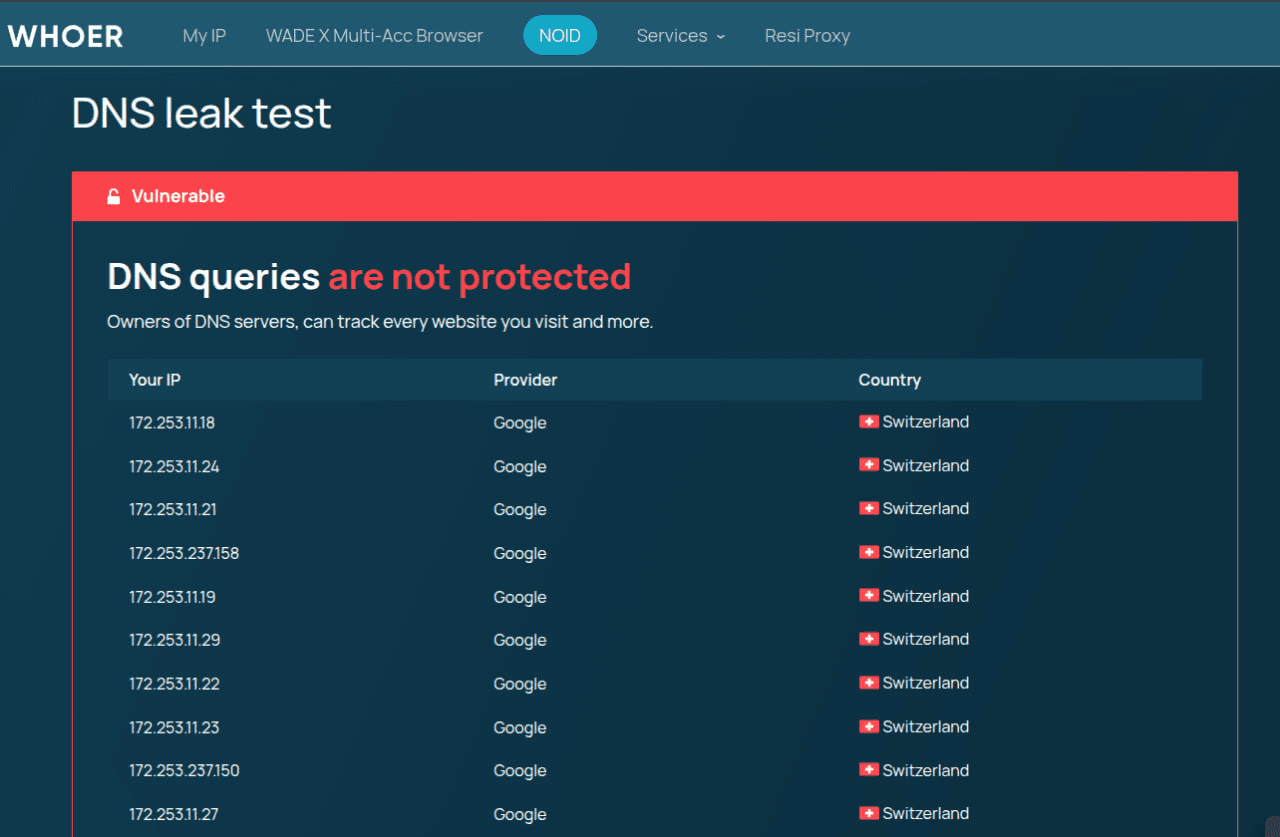
Whoer is suitable for a general connection check. It can show your public IP address, geolocation, ISP, and other network parameters.
For example, after connecting to WhoVPN, you can open Whoer and verify that the displayed IP address and geolocation match the VPN server you selected.
2. IPleak
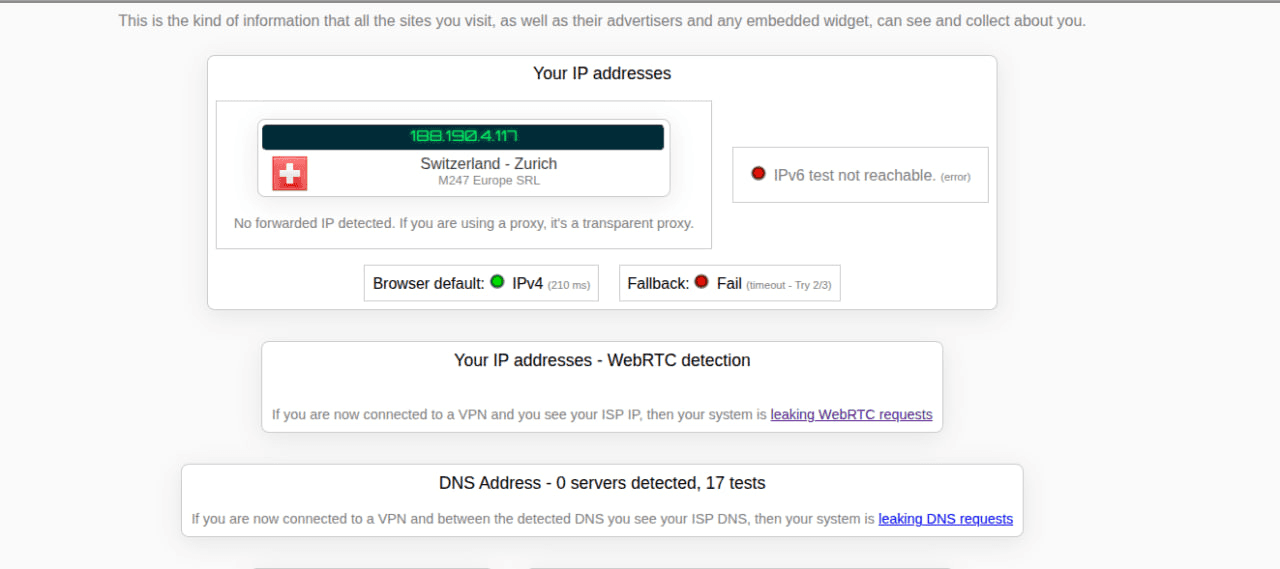
IPleak can be used to check your public IP address, DNS information, and data exposed through WebRTC.
It is useful for a broader test when you want to compare several network parameters after connecting to a VPN or Proxy.
3. DNSLeaktest
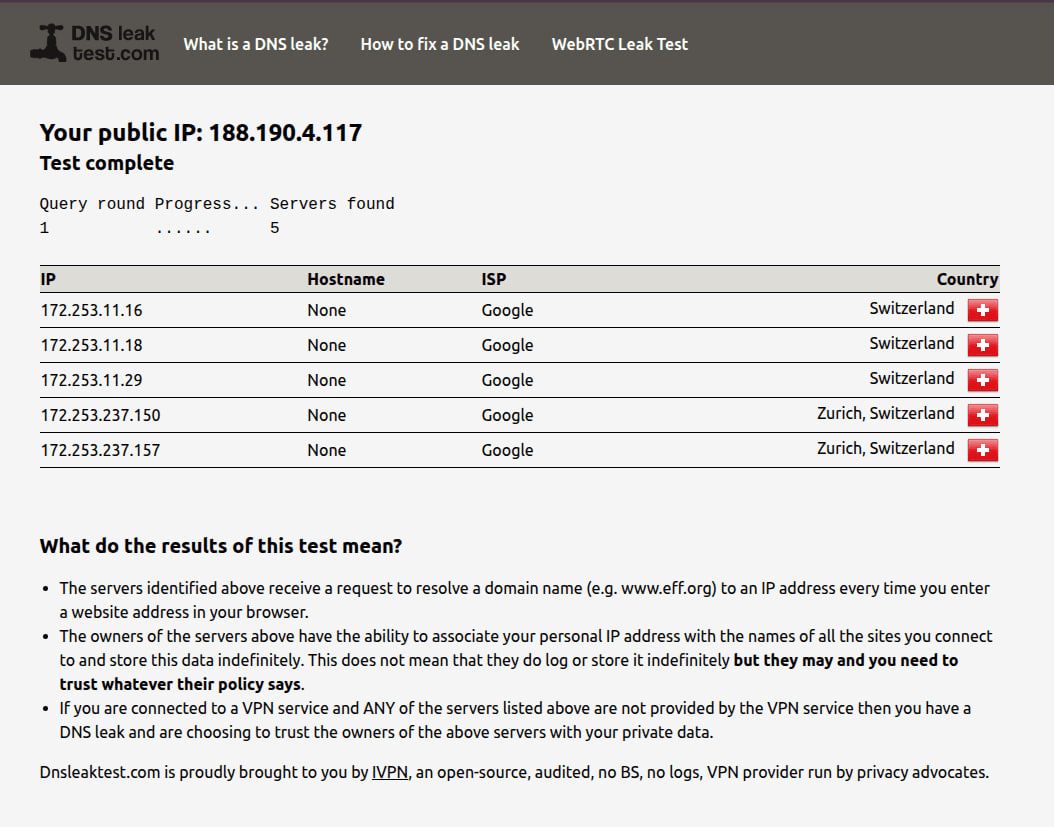
DNSLeaktest is primarily designed to detect DNS Leaks.
It displays the DNS servers handling your requests. If your original ISP’s DNS unexpectedly appears while the VPN is active, you should check your VPN, operating system, and DNS configuration.
4. BrowserLeaks
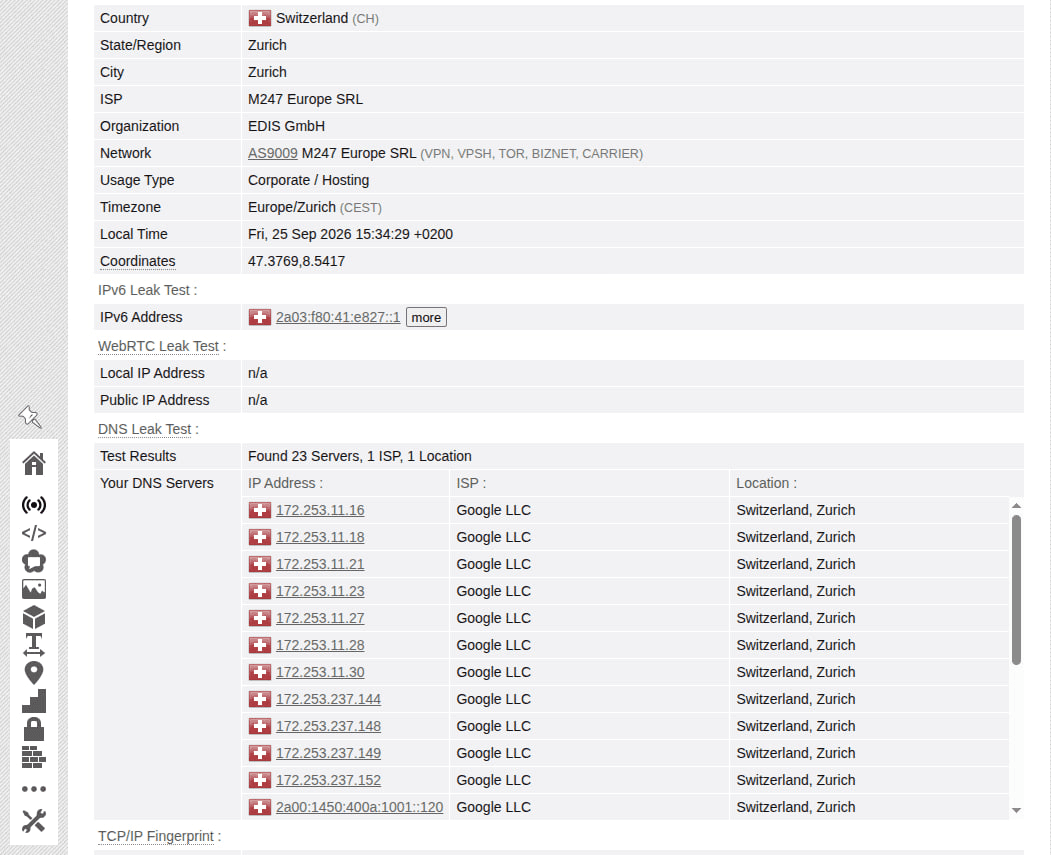
BrowserLeaks provides tools for a more detailed analysis of your browser and network environment.
You can separately check IP and WebRTC information, while other sections of the service provide tests for DNS and various Browser Fingerprint parameters.
How to Check Your Connection
For basic diagnostics, you can follow a simple sequence. First, connect to your VPN or Proxy. Then open Whoer and make sure that the public IP address and geolocation have changed as expected.
Next, use IPleak or BrowserLeaks to check WebRTC and DNS. If you specifically need to investigate DNS configuration, run a separate test with DNSLeaktest.
If necessary, a TLS Fingerprint can be checked using specialized TLS testing tools that display ClientHello parameters and JA3/JA4 fingerprints. The goal is not to have no fingerprint at all, but to make sure that the connection characteristics are consistent with the browser being used.
Conclusion
DNS, WebRTC, and TLS operate at different levels of a connection. A DNS Leak is related to how DNS requests are routed, WebRTC can expose additional network information, while a TLS Fingerprint describes characteristics of the HTTPS client.
For an initial connection check, you can use Whoer. For more detailed diagnostics, IPleak, DNSLeaktest, and BrowserLeaks can help examine individual network and browser parameters.
When using a VPN, Proxy, or antidetect browser, it is important to evaluate the environment as a whole. No single test can guarantee the absence of leaks or additional checks, so it is useful to recheck your IP, DNS, and WebRTC after making changes to the network configuration.